


INTRANET - WHAT IS A WEBSITE
WHAT IS A WEBSITE
A website is a collection of related web pages, including multimedia content, generally identified by a common domain name and published on at least one Web server (Weboneview.com, Amisduvieuxcalais.com ... are Websites).
A website may be accessible via an Internet Protocol (IP) public network, such as the Internet or a private local area network (LAN), by referencing a URL (Uniform Resource Locator) identifying the site.
Web sites can have many functions and can be used in different ways. A website may be a personal website, a corporate website, a government website, an organization website, etc.
Web sites are usually dedicated to a particular subject or purpose, from entertainment to social networks to information and education. All publicly available websites collectively constitute the World Wide Web (www), while private websites, such as a company's website for its employees, are usually part of an intranet.
Web pages, which are the building blocks of Web sites, are documents, usually composed of plain text interspersed with instructions for formatting Hypertext Markup Language (HTML, XHTML). They can incorporate elements from other websites with appropriate markup anchors. Web pages are accessible and transported using the Hypertext Transfer Protocol (HTTP), which can optionally use encryption (HTTP Secure, HTTPS) to ensure the security and privacy of the user. The user's application, often a web browser, renders the content of the page according to its HTML markup instructions on a display terminal.
PART 1 - The Website structure
The structure of a Website
The various information pages of an Internet site are organized in the form of a tree structure. The basic layout of the site involves:
- The home page.
- The main section with the general menu.
- Subsections with detailed information pages.
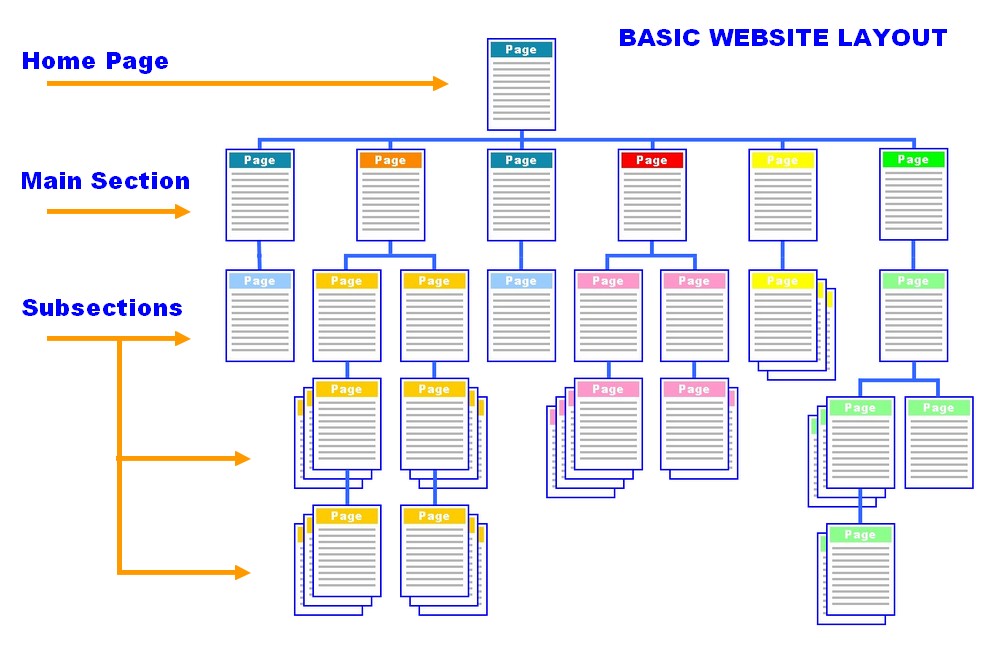
The structure of a Website
The various information pages of an Internet site are organized in the form of a tree structure. The basic layout of the site involves:
- The home page.
- The main section with the general menu.
- Subsections with detailed information pages.
PART 2 - The pages
The pages
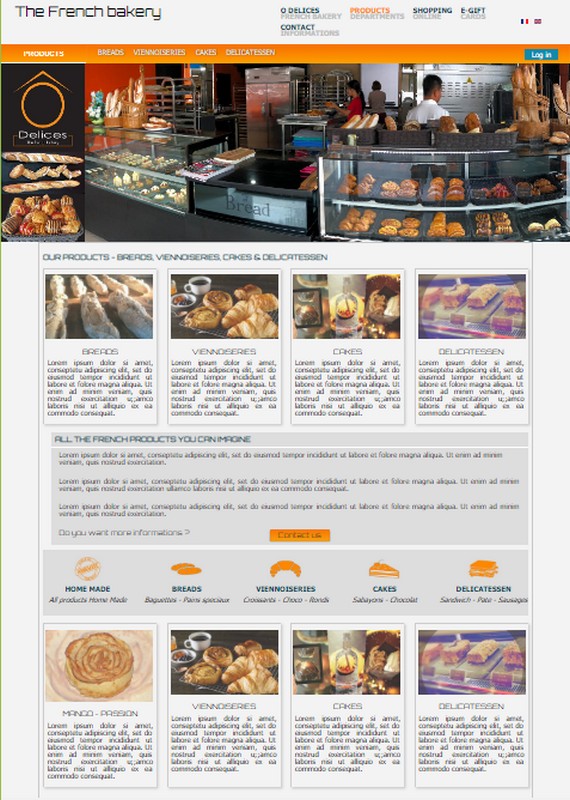
Websites are organized around different types of pages:
- Homepage: This is the page on which the user arrives after typing the 'domain name' of the Website. There is only 1 homepage per language. It usually contains the main menu.
- The Main Sections pages: These are the pages on which the user arrives after clicking on one of the menu entries. There are as many as menu entries, and languages. They usually contain more detailed information, as well as 'Links' to the detail pages.
- Sub-section pages: These are the detailed information pages of the Website. There may be some of them to a very large number.
The pages
Websites are organized around different types of pages:
- Homepage: This is the page on which the user arrives after typing the 'domain name' of the Website. There is only 1 homepage per language. It usually contains the main menu.
- The Main Sections pages: These are the pages on which the user arrives after clicking on one of the menu entries. There are as many as menu entries, and languages. They usually contain more detailed information, as well as 'Links' to the detail pages.
- Sub-section pages: These are the detailed information pages of the Website. There may be some of them to a very large number.
PART 3 - The Website template
The Website template
Each page of a Web site is put page according to the template on which it depends (the site can use 1 or several templates). This is the layout template of the web page. The defined template areas or each content will take place directly. It is thus the guarantor of a standardized layout in a given Website.
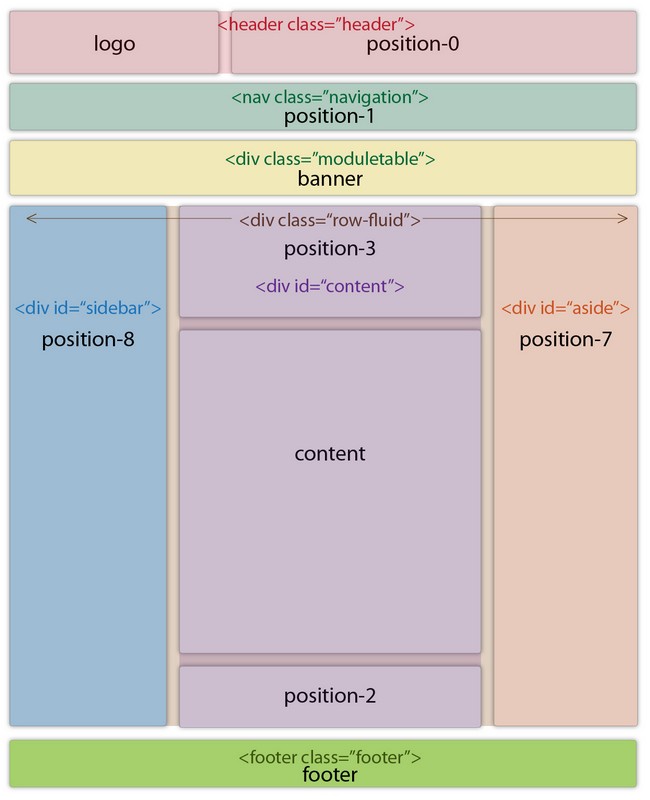
The Website template
Each page of a Web site is put page according to the template on which it depends (the site can use 1 or several templates). This is the layout template of the web page. The defined template areas or each content will take place directly. It is thus the guarantor of a standardized layout in a given Website.
PART 4 - The concept of 'Menu'
The concept of 'Menu'
Menus are the physical and organized representation of links that allow for movement in the general tree of a Web site.
They can be horizontal or vertical, and possibly have menu sub-levels.
The main menu is usually displayed on all pages of the Website.

The concept of 'Menu'
Menus are the physical and organized representation of links that allow for movement in the general tree of a Web site.
They can be horizontal or vertical, and possibly have menu sub-levels.
The main menu is usually displayed on all pages of the Website.
PART 5 - The concept of 'Link'
The concept of 'Link'
A link is a web address (URL: Uniform Resource Locator) that is contained in each menu entry. This link allows you to move from page to page in websites.
Links can also take place at any place on a page.
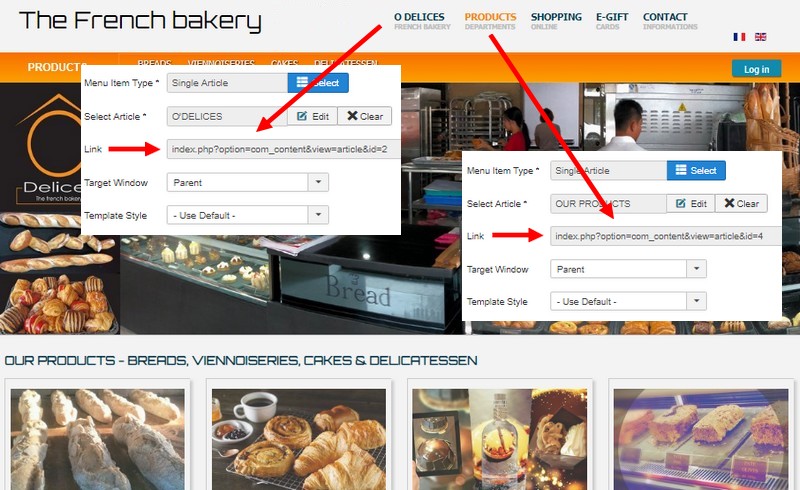
The concept of 'Link'
A link is a web address (URL: Uniform Resource Locator) that is contained in each menu entry. This link allows you to move from page to page in websites.
Links can also take place at any place on a page.

Our websites are developed with your business goal in mind. Resorts, Shops, Restaurants, Bars, Estates, Corporates ...
We design and develop websites for small to large businesses.

Launch your Online Business in order to grow sales. We accompany you to develop the Business Online Strategy before starting out.
Whatever you sell, your E-Commerce Website will increase your sales ...

Appear in the best position possible in the Search Engines with SEO. Used with e-Mailing and Social Network, this is the best way to get more visitors and grow your business.

We strive to innovate. From print, corporate identity design and logos, to booklets, business card design and paper and Online brochures.
Whatever your print or design needs, our design studio is looking forward to being creative with your business.


